Patellofemoral Pain Treatment in Newcastle
Expert Physiotherapy for Patellofemoral Pain
Patellofemoral pain, often called runner's knee, is one of the most common causes of pain at the front of the knee. It can affect runners, cyclists, gym-goers and people who simply notice discomfort when climbing stairs, squatting or sitting for long periods.
At NE Physio, we provide expert assessment and evidence-based physiotherapy for patellofemoral pain. Rather than simply treating the symptoms, we identify the factors contributing to your knee pain and create a personalised rehabilitation programme to help you recover and prevent the problem from returning.
Whether you're training for your next marathon, returning to football or simply want to walk without pain, we're here to help.
What is Patellofemoral Pain?
Patellofemoral pain is pain that originates from the joint between the kneecap (patella) and the thigh bone (femur). It develops when the structures around this joint become irritated, usually because the loads placed through the knee exceed its ability to tolerate them.
Despite being commonly known as "runner's knee", patellofemoral pain doesn't only affect runners. It is frequently seen in people of all ages and activity levels and is one of the most common knee conditions treated by physiotherapists.
The good news is that most people improve significantly with the right rehabilitation programme, without needing injections or surgery.
What Causes Patellofemoral Pain?
Patellofemoral pain is rarely caused by a single factor. Instead, it usually develops due to a combination of increased loading and reduced capacity of the knee to cope with that load.
Common contributing factors include:
- Sudden increases in running or training volume
- Weakness of the quadriceps or hip muscles
- Reduced lower limb strength
- Poor movement control during activities such as squatting or running
- Reduced flexibility
- Previous knee injuries
- Repetitive stair climbing or hill running
- Prolonged kneeling or squatting at work
For many people, symptoms begin after increasing activity levels rather than following one specific injury.
If you're pain related to running and is located on the outside of your knee you may have ITB Pain.
Pain located directly under the knee cap may be due to Patella Tendinopathy.
Symptoms of Patellofemoral Pain
Patellofemoral pain usually develops gradually.
Common symptoms include:
- Pain around or behind the kneecap
- Pain when walking downstairs
- Pain during squatting
- Pain after sitting for prolonged periods
- Pain during running
- Discomfort when kneeling
- Clicking or grinding sensations
- Stiffness after activity
Many people notice symptoms are worse during activities that place greater load through the front of the knee, such as downhill walking or descending stairs.
How is Patellofemoral Pain Diagnosed?
At NE Physio, diagnosis starts with a detailed assessment of your symptoms and movement.
Your physiotherapist will discuss:
- When your symptoms began
- Aggravating activities
- Sporting activities
- Previous injuries
- Training history
- Recovery goals
We will then assess:
- Knee movement
- Hip strength
- Quadriceps strength
- Balance
- Squatting mechanics
- Walking and running technique where appropriate
- Functional activities relevant to your goals
Imaging such as MRI or X-rays is rarely required unless another condition is suspected. Patellofemoral pain is primarily diagnosed through a thorough clinical assessment
Physiotherapy Treatment for Patellofemoral Pain
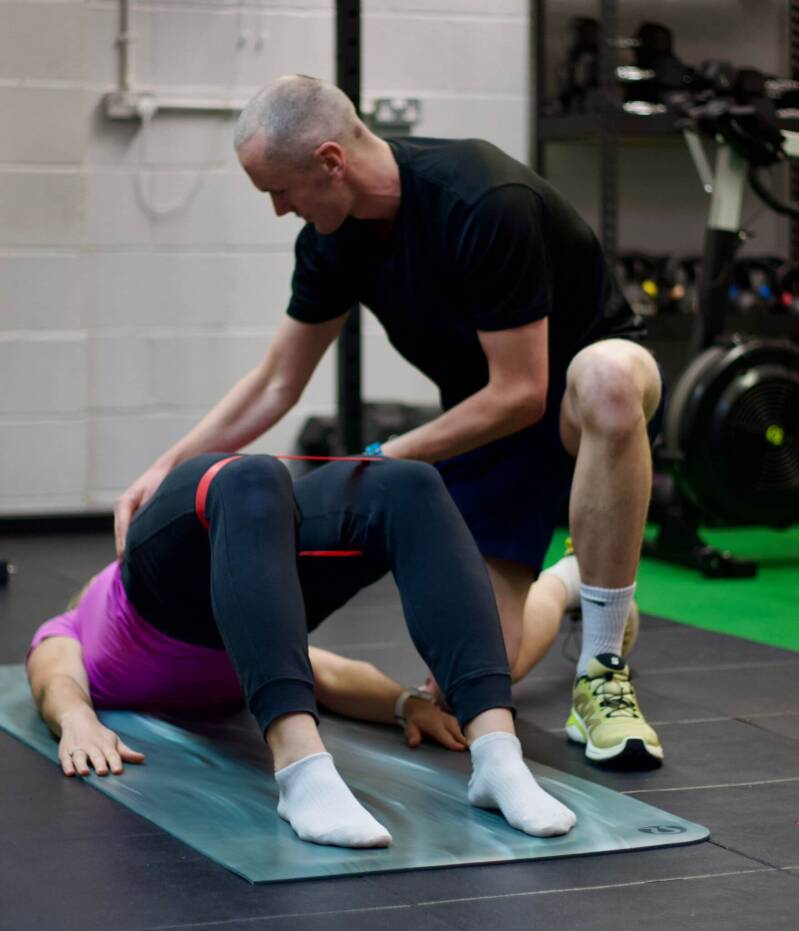
Exercise therapy is considered the most effective treatment for patellofemoral pain.
Your rehabilitation programme will be tailored to your symptoms, activity levels and goals.
Education
Understanding why your pain developed is an important part of recovery.
We'll explain:
- Why your symptoms occur
- How to manage flare-ups
- Which activities are safe
- How to gradually increase loading
Strength Training
Improving strength is often the cornerstone of treatment.
Exercises may focus on strengthening:
- Quadriceps
- Gluteal muscles
- Hamstrings
- Calf muscles
- Core muscles
Improving strength helps the knee tolerate higher loads and supports long-term recovery.
Movement Retraining
Small changes in movement can reduce irritation around the kneecap.
Depending on your goals, rehabilitation may include:
- Squat technique
- Step-down control
- Landing mechanics
- Running assessment
- Single-leg stability exercises
Manual Therapy
Where appropriate, hands-on treatment may be used to improve movement, reduce discomfort and complement your exercise programme.
Return to Running and Sport
Returning too quickly can cause symptoms to flare.
We'll guide you through a structured progression back to:
- Running
- Cycling
- Gym training
- Football
- Rugby
- Hiking
- Other sports
Progression is based on your symptoms, strength and function rather than simply the number of weeks since your pain began.
How Long Does Recovery Take?
Recovery varies depending on:
- How long symptoms have been present
- Your activity levels
- Muscle strength
- Training loads
- Consistency with rehabilitation
Many people notice significant improvements within six to twelve weeks, although longer-standing symptoms may require a more gradual rehabilitation programme.
The earlier rehabilitation begins, the better the opportunity to address contributing factors before symptoms become persistent.
Can Patellofemoral Pain Be Prevented?
Although not every episode can be prevented, you can reduce your risk by:
- Progressing training gradually
- Maintaining lower limb strength
- Including recovery days in your training
- Improving movement control
- Wearing suitable footwear
- Addressing symptoms early before they become persistent
We'll provide practical advice specific to your sport, occupation and lifestyle.
Why Choose NE Physio?
At NE Physio, every appointment is one-to-one and tailored to your individual needs.
We provide:
- Comprehensive assessment
- Accurate diagnosis
- Evidence-based rehabilitation
- Progressive strengthening programmes
- Running and sports rehabilitation
- Hands-on treatment where appropriate
- Clear advice to help prevent recurrence
- Whether you're a recreational runner, competitive athlete or simply want to move without knee pain, we'll help you return to the activities you enjoy with confidence.
Testimonials
"I had been struggling with knee pain for a few years, then I saw Gemma and we worked together for a few months, I now don’t have any knee pain and I am able to run properly again. A massive thank you for all the help you gave me!" Charles (Google Reviews)
"Working to deal with a number of issues, Matty is friendly and really helping to build confidence and progress whilst also still training with in gym and at home exercises. Would definitely recommend!" Andrew (Google Reviews)
"Matty is a really friendly and approachable guy. He gave a thorough assessment and got to the route of my knee problem. I feel safe getting back into sports and I’ve noticed that the exercises are helping me to feel stronger already! Looking forward to the follow up session- thanks Matty!" Kat (Google Reviews)
If pain around your kneecap is limiting your running, sport or everyday activities, early physiotherapy can help reduce pain and restore your confidence.
Book an appointment with NE Physio today for a comprehensive assessment and personalised rehabilitation programme. We help people across Newcastle recover from patellofemoral pain and return to walking, running and sport with confidence.
Or call 07881237839 to arrange an appointment.
Page Created and Reviewed by Clinician: Matthew Ivin PH 118421