Meniscus Tear Physiotherapy Newcastle | NE Physio

Expert Physiotherapy for Meniscus Tears
A meniscus tear is one of the most common knee injuries, affecting everyone from runners and footballers to people who simply twist awkwardly while walking or getting out of a car. It can cause pain, swelling, stiffness and difficulty with everyday activities such as walking, climbing stairs or squatting.
At NE Physio, we provide expert assessment and evidence-based physiotherapy for meniscus injuries. Our aim is to accurately diagnose the cause of your knee pain, guide your recovery and help you return to the activities you enjoy as quickly and safely as possible.
Whether your injury occurred during sport or developed gradually over time, we’ll create a personalised rehabilitation programme based on your goals and lifestyle.
What is a Meniscus Tear?
The menisci are two crescent-shaped pieces of cartilage within each knee. They act as shock absorbers between the thigh bone (femur) and shin bone (tibia), helping to distribute load, improve joint stability and protect the cartilage lining the knee.
Each knee has:
- A medial meniscus (inside of the knee)
- A lateral meniscus (outside of the knee)
A tear can occur when the knee twists while the foot remains planted or as part of the natural ageing process. Not all meniscus tears cause symptoms, and many people have small tears without pain.
Understanding the type of tear, your symptoms and your activity level is essential when deciding on the most appropriate treatment.
Common Causes of a Meniscus Tear
Meniscus tears generally fall into two categories.
Traumatic Meniscus Tears
These are more common in younger people and often occur during sport.
Typical mechanisms include:
- Twisting while changing direction
- Landing awkwardly from a jump
- Sudden pivoting movements
- Tackles during football or rugby
- Skiing injuries
Traumatic tears are frequently associated with ligament injuries, particularly the anterior cruciate ligament (ACL).
Degenerative Meniscus Tears
As we age, the meniscus gradually becomes less flexible and more susceptible to injury.
In these cases, a tear may develop after relatively minor movements such as:
- Squatting
- Kneeling
- Stepping off a curb
- Turning while walking
Degenerative tears are common in adults over 40 and often coexist with early osteoarthritis.
Symptoms of a Meniscus Tear
Symptoms vary depending on the size and location of the tear.
Common symptoms include:
- Pain along the inside or outside of the knee
- Swelling
- Stiffness
- Clicking or catching sensations
- Pain when squatting
- Difficulty twisting
- Reduced confidence on uneven ground
- Pain during running or sport
Some people also experience episodes where the knee feels as though it locks or cannot fully straighten. True locking is uncommon but may require further medical assessment.
If you pain is located more anteriorly, please see our Patellofemoral Pain page.
How is a Meniscus Tear Diagnosed?
At NE Physio, your assessment begins with a detailed discussion about your symptoms, activity levels and how the injury occurred.
Your physiotherapist will assess:
- Knee range of movement
- Joint swelling
- Tenderness around the joint line
- Ligament stability
- Muscle strength
- Balance and movement quality
- Functional tasks such as squatting and stepping
Special tests may help guide the diagnosis, but no single clinical test is completely accurate in isolation. We use the combination of your history and examination findings to build the clearest picture of your injury.
MRI scans are sometimes useful, particularly if surgery is being considered or your symptoms are not improving. However, many meniscus tears are seen on MRI in people who have no knee pain at all, so imaging should always be interpreted alongside your clinical assessment.
Physiotherapy Treatment for Meniscus Tears
Most people benefit from a structured rehabilitation programme.
Treatment may include:
Education
Understanding your injury and knowing what activities are safe can improve confidence and support recovery.
Pain and Swelling Management
During the early stages, treatment focuses on reducing irritation while keeping the knee moving.
This may include:
- Activity modification
- Ice if it helps symptoms
- Compression where appropriate
- Gradual return to walking
Restoring Knee Movement
Regaining full knee extension and comfortable bending is often an important early goal.
Strength Training
As pain settles, rehabilitation progresses to strengthening the muscles that support the knee, including:
- Quadriceps
- Hamstrings
- Gluteal muscles
- Calf muscles
Improving strength helps reduce stress on the knee and restores confidence during everyday activities.
Balance and Functional Rehabilitation
Rehabilitation also includes exercises that improve:
- Balance
- Coordination
- Single-leg control
- Squatting technique
- Stair climbing
- Running mechanics where appropriate
Return to Sport
If you participate in sport, rehabilitation is progressed gradually to include:
- Agility drills
- Change of direction
- Jumping and landing
- Sport-specific exercises
Your return will be based on strength, function and confidence rather than simply the amount of time since your injury.
Do All Meniscus Tears Need Surgery?
No. Most people do not require surgery.
Research has shown that many meniscus tears, particularly degenerative tears, improve with physiotherapy and exercise. In many cases, outcomes following rehabilitation are comparable to surgery over the longer term.
Surgery may be considered if you have:
- Persistent mechanical locking of the knee
- A repairable traumatic tear
- Significant instability caused by the tear
- Symptoms that have not improved despite an appropriate course of rehabilitation
If your assessment suggests you would benefit from an orthopaedic opinion, we can advise you on the most appropriate next steps.
Recovery After a Meniscus Tear
Recovery time depends on several factors, including:
- The type of tear
- Its location
- Whether surgery is required
- Your age
- Activity levels
- General health
Many people notice meaningful improvements within six to twelve weeks of structured rehabilitation, although returning to higher-level sport may take longer.
Our aim is not simply to reduce pain but to restore your strength, confidence and ability to return to the activities that matter most.
Preventing Future Knee Injuries
Although not every injury can be prevented, you can reduce your risk by:
- Maintaining lower limb strength
- Improving balance and coordination
- Warming up before sport
- Progressing training loads gradually
- Addressing movement control issues
- Wearing appropriate footwear for your activity
We’ll provide advice tailored to your sport, occupation and goals to help reduce the likelihood of future injuries.
Why Choose NE Physio?
At NE Physio, you’ll receive a thorough one-to-one assessment and a rehabilitation programme designed around your individual needs.
We focus on:
- Accurate diagnosis
- Evidence-based treatment
- Progressive rehabilitation
- Hands-on treatment where appropriate
- Clear explanations without unnecessary jargon
- Helping you return to work, sport and everyday life with confidence
Whether you’re recovering from a recent sporting injury or dealing with ongoing knee pain, we’re here to help.
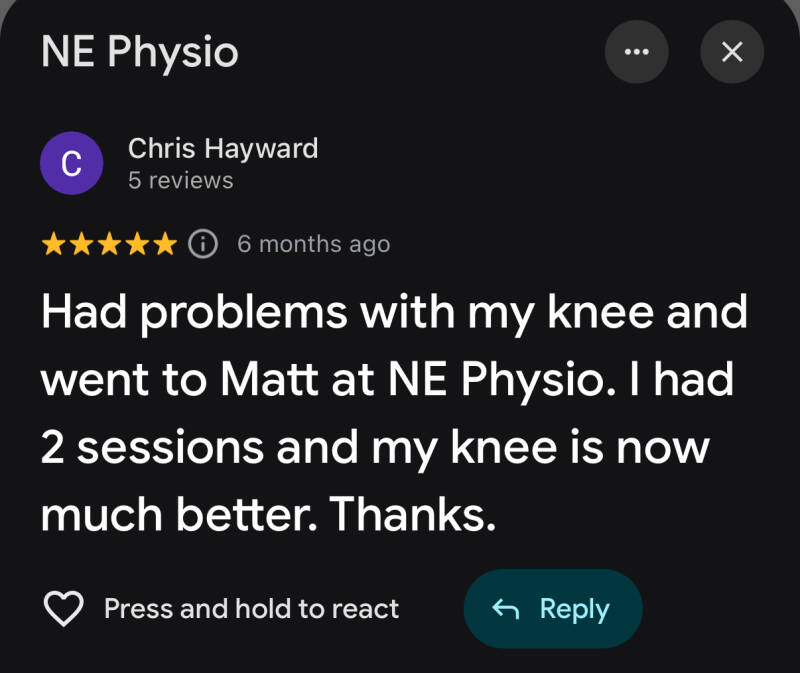
Testimonials
FAQs
Is physiotherapy the best treatment for me?
In the majority of cases knee pain from meniscus tears will improve with physiotherapy and is considered the best first line treatment.
We can advise if you need a more timely surgical opinion.
What if I need a scan?
In most cases a meniscal tear is a clinical diagnosis (based of assessment).
We can advise on the need for a scan and refer for this if necessary
What if I need surgery?
We can advise if you need an opinion from a surgeon and refer to local surgeons if required.
Book Your Meniscus Assessment
If you’ve twisted your knee, have persistent knee pain or think you may have torn your meniscus, early assessment can help identify the cause of your symptoms and guide the most effective treatment.
Book an appointment with NE Physio today for a comprehensive assessment and personalised rehabilitation plan. We proudly help people across Newcastle recover from meniscus injuries, reduce knee pain and return to the activities they enjoy.
Or contact on 07881237839 to arrange an appointment.
Page Created and Reviewed by Clinician: Matthew Ivin PH 118421