Calf Injury Physiotherapy in Newcastle
Calf Pain, Calf Strains and Rehabilitation
Calf injuries are common in runners, footballers, rugby players and other athletes involved in running, sprinting and jumping. They can range from a mild muscle strain that settles quickly to a more significant tear requiring a longer period of rehabilitation.
Calf pain can also develop gradually rather than following one obvious injury. Repetitive loading, changes in training and reduced calf capacity can all contribute to symptoms.
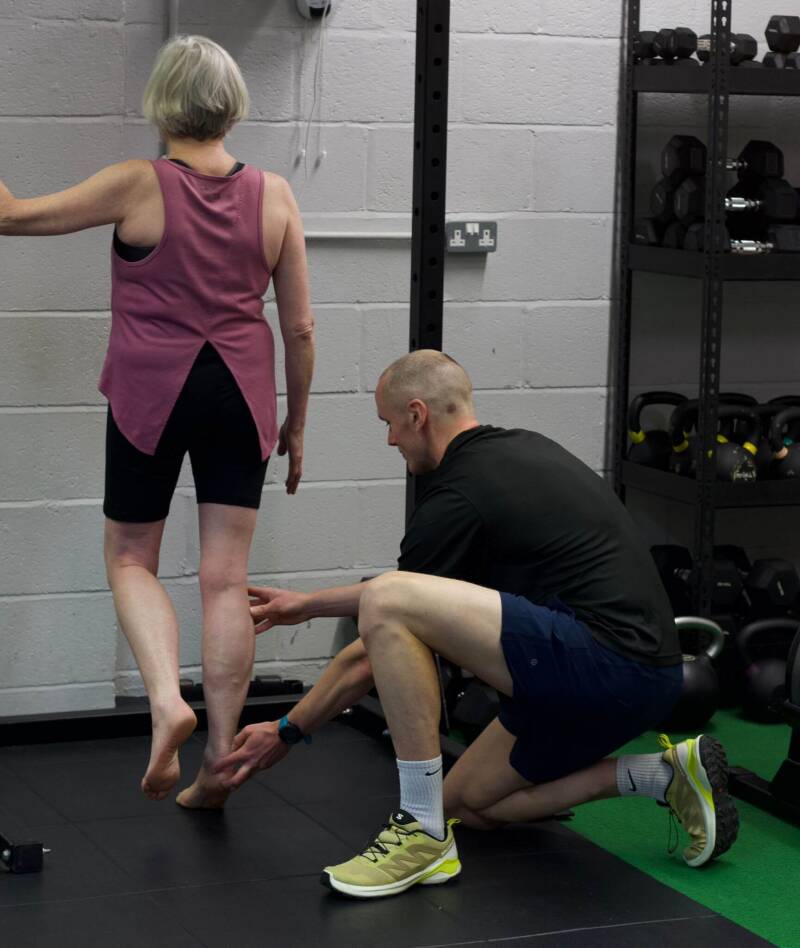
At NE Physio in Newcastle, we assess calf injuries and develop an individualised rehabilitation programme to restore strength, running capacity and confidence and help you return safely to sport and exercise.
What is a calf injury?
The calf is made up of several muscles, with the gastrocnemius and soleus being the main muscles involved in walking, running and jumping.
The calf muscles connect through the Achilles tendon to the heel and play an important role in:
-
Pushing the body forwards during walking and running
-
Absorbing load when landing
-
Controlling the ankle
-
Jumping and sprinting
-
Maintaining balance
-
Supporting the Achilles tendon
A calf injury can affect the muscle itself, the muscle-tendon junction or, less commonly, associated tendons and surrounding structures.
Types of Calf Injury
Calf strain
A calf strain occurs when muscle fibres are overstretched and damaged.
It can range from a minor injury to a significant tear.
Gastrocnemius strain
The gastrocnemius is particularly important during high-speed running and jumping.
A sudden gastrocnemius injury may occur when accelerating, sprinting or pushing off, often causing sudden pain in the back of the calf.
Soleus injury
The soleus sits underneath the gastrocnemius and is particularly important for endurance activities such as running.
Soleus injuries can sometimes develop more gradually and may cause pain deeper in the calf.
Calf muscle tear
A more significant injury can involve a partial or complete tear of the muscle.
The severity of the tear influences recovery time and the rehabilitation programme.
What causes calf injuries?
Calf injuries often occur when the load placed on the calf suddenly exceeds its current capacity.
Common triggers include:
-
Sprinting
-
Sudden acceleration
-
Jumping
-
Changing direction
-
Running uphill
-
Increasing running mileage
-
Introducing speed work
-
Returning to sport after a break
-
Fatigue during exercise
-
Sudden changes in training
-
Inadequate recovery
Calf injuries can also occur when the muscle is exposed to a load it is not accustomed to, even if the activity itself does not seem particularly demanding.
Symptoms of a Calf Strain
Symptoms depend on the severity of the injury.
You may experience:
-
Sudden calf pain
-
A sharp or tearing sensation
-
Pain when walking
-
Pain when pushing off
-
Swelling
-
Bruising
-
Calf tenderness
-
Tightness
-
Reduced ankle movement
-
Weakness
-
Difficulty performing a calf raise
-
Pain when running or jumping
A more significant tear may cause immediate difficulty continuing exercise.
Calf Injury Assessment
A physiotherapy assessment can help determine the likely location and severity of the injury.
Your physiotherapist may assess:
-
Location of your pain
-
Mechanism of injury
-
Calf tenderness
-
Swelling and bruising
-
Ankle movement
-
Calf strength
-
Single-leg heel raises
-
Walking
-
Hopping
-
Running, when appropriate
-
Previous calf injuries
-
Recent changes in training
The assessment will also consider whether your symptoms could be coming from another structure.
Calf Injury or Achilles Tendinopathy?
Calf and Achilles problems can sometimes feel similar.
Calf muscle injuries are often associated with pain within the muscle, particularly following a sudden high-load movement.
Achilles tendinopathy more commonly causes pain around the Achilles tendon near the heel or lower part of the tendon.
However, symptoms can overlap, particularly where the calf muscles and Achilles tendon are both being heavily loaded.
A clinical assessment can help determine which structures are contributing to your symptoms.
Calf Injury Treatment
Treatment depends on the severity and stage of your injury.
The initial focus is usually on managing symptoms while gradually restoring movement and load tolerance.
Early management
During the early stages, treatment may include:
-
Relative rest from aggravating activity
-
Gradual weight-bearing
-
Gentle ankle movement
-
Pain management
-
Compression where appropriate
-
Gradual return to normal walking
Complete rest for a prolonged period is generally not necessary.
The aim is to gradually introduce loading as the injury allows.
Progressive Calf Strengthening
Strengthening is the foundation of calf rehabilitation.
Early exercises may include:
-
Isometric calf contractions
-
Seated calf raises
-
Double-leg calf raises
-
Resistance-band exercises
As your strength improves, rehabilitation can progress to:
-
Single-leg calf raises
-
Loaded calf raises
-
Bent-knee calf raises
-
Heavy resistance training
-
Explosive calf exercises
Both the gastrocnemius and soleus need to be rehabilitated because they perform different roles during movement.
Gastrocnemius and Soleus Strength
The gastrocnemius crosses both the knee and ankle, while the soleus only crosses the ankle.
This means that calf rehabilitation should include exercises performed with different knee positions.
For example:
Straight-knee calf raises can place greater emphasis on the gastrocnemius.
Bent-knee calf raises increase the contribution of the soleus.
A comprehensive rehabilitation programme will generally train both.
Returning to Running
Returning to running should be gradual following a calf injury.
Before running, you should have regained sufficient:
-
Calf strength
-
Ankle movement
-
Single-leg control
-
Walking tolerance
-
Hopping capacity
A typical progression may be:
Walking → brisk walking → jogging → continuous running → faster running → hills → intervals → sprinting
The exact progression depends on the severity of the injury and your normal running demands.
Returning to Sport
Athletes involved in sprinting, football, rugby and other explosive sports need to regain more than basic calf strength.
Later rehabilitation may include:
-
Hopping
-
Repeated hopping
-
Jumping
-
Landing
-
Acceleration
-
Deceleration
-
Sprinting
-
Changes of direction
-
Sport-specific drills
The aim is to prepare the calf for the high forces and rapid loading experienced during sport.
How Long Does a Calf Injury Take to Heal?
Recovery time depends on the severity of the injury.
A mild calf strain may improve within a few weeks, while a more significant tear can take considerably longer.
Factors affecting recovery include:
-
Size and location of the injury
-
Severity of the tear
-
Previous calf injuries
-
Strength
-
Training demands
-
Rehabilitation
-
How quickly normal loading is restored
Pain often improves before the calf has fully regained its strength. Returning to high-speed running too early can therefore increase the risk of re-injury.
Recurrent Calf Injuries
Some people experience repeated calf strains, particularly when returning to running or sport.
Potential contributors include:
-
Inadequate rehabilitation
-
Reduced calf strength
-
Poor load management
-
Rapid increases in training
-
Previous calf injury
-
Insufficient exposure to high-speed running
Rehabilitation should therefore address not only the original injury but also the factors that may have contributed to it.
Preventing Calf Injuries
There is no way to completely eliminate the risk of calf injury, but improving calf capacity can help.
Useful strategies include:
-
Regular calf strengthening
-
Gradually increasing running volume
-
Progressive exposure to faster running
-
Appropriate recovery
-
Avoiding sudden spikes in training
-
Maintaining strength during periods of reduced running
For runners, maintaining calf strength throughout the year can be particularly useful rather than only strengthening after an injury.
Calf Pain Without a Sudden Injury
Not all calf pain is caused by a muscle tear.
Gradual calf pain can be associated with:
-
Calf muscle overload
-
Tendinopathy
-
Achilles tendon problems
-
Nerve-related symptoms
-
Referred pain from the lower back
-
Changes in training load
-
Other musculoskeletal conditions
A physiotherapy assessment can help determine the likely cause.
When Should I See a Physiotherapist?
Consider an assessment if:
-
Calf pain is preventing you from running or exercising
-
You felt a sudden sharp pain during sport
-
You have significant swelling or bruising
-
You cannot walk normally
-
You cannot perform a single-leg calf raise
-
You have recurrent calf injuries
-
Your symptoms are not improving
-
You are unsure when to return to running
-
You want to reduce your risk of re-injury
Important: Calf Pain and Blood Clots
Not all calf pain is a muscle injury.
A deep vein thrombosis (DVT) can cause calf pain and swelling and requires urgent medical assessment.
Seek urgent medical attention if you develop unexplained calf swelling, warmth, redness or significant pain, particularly if this occurs without a clear injury or is associated with symptoms such as chest pain or shortness of breath.
Do not assume unexplained calf pain is a muscle strain.
Frequently Asked Questions
How do I know if I have torn my calf?
A calf tear often causes sudden pain during running, sprinting or jumping and may feel like a sharp pull, snap or tearing sensation.
Bruising, swelling and difficulty walking or performing a calf raise can occur with more significant injuries.
A physiotherapy assessment can help determine the likely severity.
Should I massage a calf strain?
Deep massage is generally avoided during the very early stages of a significant muscle injury.
As the injury progresses, manual therapy may sometimes be used alongside progressive exercise, but strengthening and gradual exposure to load are generally more important for restoring function.
Should I stretch a calf strain?
Aggressive stretching is not usually appropriate immediately after a significant calf injury.
As the calf heals, gentle movement and progressively restoring ankle range can be introduced. Stretching can then be considered as part of the wider rehabilitation programme where appropriate.
Can I run with a calf strain?
Running is usually reduced or temporarily stopped following an acute calf strain.
You can gradually return to running once you have regained sufficient strength, movement and tolerance to impact. Your physiotherapist can help determine when you are ready.
How long should I rest after a calf strain?
There is no single number of days that applies to every calf injury.
The early goal is to reduce activities that significantly aggravate symptoms while maintaining appropriate movement. Progressive strengthening should then begin and increase according to your recovery.
Why does my calf keep getting injured?
Recurrent calf injuries can be associated with inadequate rehabilitation, reduced strength, sudden increases in running or insufficient exposure to high-speed loading.
A detailed assessment can help identify the factors contributing to repeated injuries.
What exercises are best for calf injuries?
Rehabilitation usually progresses from simpler calf contractions and raises towards heavy resistance and explosive exercises.
Both straight-knee and bent-knee calf strengthening are important for developing the capacity of the gastrocnemius and soleus.
When can I return to sport after a calf injury?
You should be able to tolerate the demands of your sport before returning fully.
This may include pain-free or well-controlled running, calf raises, hopping, jumping, acceleration, deceleration and sport-specific movements.
Can a calf injury cause long-term pain?
Most calf injuries improve with appropriate rehabilitation. However, persistent pain can occur, particularly if the injury has not fully recovered or if the original diagnosis was incorrect.
Persistent symptoms should be reassessed.
Do I need an MRI or ultrasound for a calf injury?
Most straightforward calf strains can be diagnosed clinically and do not require imaging.
Ultrasound or MRI may be considered when the diagnosis is uncertain, symptoms are unusually severe or recovery is not progressing as expected.
Calf Injury Physiotherapy in Newcastle
At NE Physio, we provide assessment and rehabilitation for calf strains, calf tears and persistent calf pain in Newcastle.
We will assess your injury and current capacity before developing a progressive programme designed around your goals.
Whether you want to return to running, get back to football, resume gym training or simply walk without pain, rehabilitation will be tailored to the demands you need to meet.
Book Your Calf Injury Assessment
If you have calf pain or are recovering from a calf strain, book a physiotherapy assessment with NE Physio in Newcastle.
Page Created and Reviewed by Clinician: Matthew Ivin PH 118421