Ankle Fracture Physiotherapy in Newcastle
Ankle Fracture Treatment and Rehabilitation
An ankle fracture is a break in one or more of the bones that make up the ankle joint. Ankle fractures can range from a small, stable fracture that heals with a walking boot to a more significant injury requiring surgery and internal fixation.
An ankle fracture can cause significant pain, swelling, bruising and difficulty putting weight through the leg. Recovery does not necessarily finish when the bone has healed. Following an ankle fracture, you may also experience stiffness, weakness, reduced balance and difficulty returning to running or sport.
At NE Physio in Newcastle, we provide rehabilitation following ankle fractures, including recovery after surgical fixation (ORIF) and non-operative treatment. Our aim is to help you restore movement, strength and function and safely return to your normal activities.
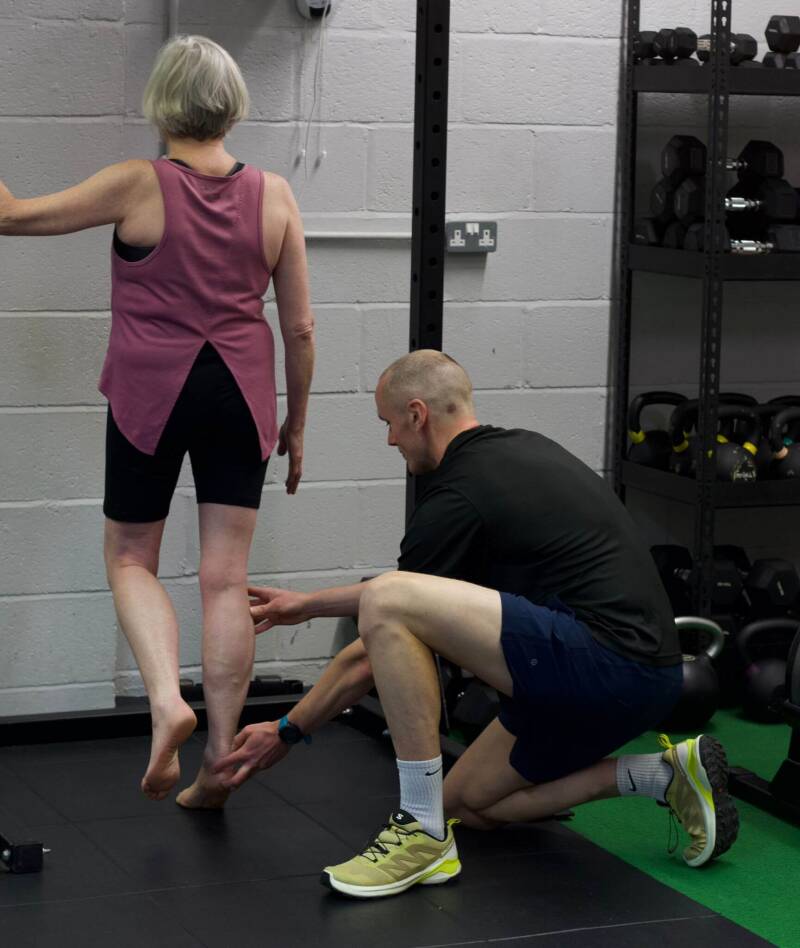
What is an ankle fracture?
The ankle joint is formed by three main bones:
-
Tibia – the shin bone
-
Fibula – the smaller bone on the outside of the lower leg
-
Talus – the bone underneath the tibia that forms the main ankle joint
An ankle fracture can involve one or more of these bones.
Common types include:
Lateral malleolus fracture
A fracture of the lower end of the fibula. This is one of the most common ankle fractures.
Some isolated lateral malleolus fractures are stable and can be treated without surgery, while others require fixation depending on the position of the fracture and stability of the ankle.
Medial malleolus fracture
A fracture of the lower end of the tibia on the inside of the ankle.
It can occur alone or alongside a fibula fracture.
Bimalleolar fracture
A fracture involving both the medial and lateral malleoli.
These injuries are often unstable and may require surgical treatment.
Trimalleolar fracture
A more significant fracture involving the medial and lateral malleoli as well as the posterior portion of the tibia.
These fractures can be associated with ankle instability and displacement and frequently require specialist orthopaedic management.
Syndesmosis injury
The syndesmosis is a group of ligaments connecting the tibia and fibula just above the ankle joint.
A fracture can be associated with damage to the syndesmosis, potentially making the ankle unstable and requiring additional surgical fixation.
What causes an ankle fracture?
Ankle fractures can occur following relatively low-energy injuries or significant trauma.
Common causes include:
-
Twisting the ankle
-
Falling
-
Landing awkwardly
-
Sports injuries
-
Cycling accidents
-
Road traffic accidents
-
A direct blow to the ankle
-
High-energy trauma
People with reduced bone density may also sustain fractures following relatively minor trauma.
Symptoms of an ankle fracture
Typical symptoms include:
-
Immediate ankle pain
-
Significant swelling
-
Bruising
-
Difficulty or inability to bear weight
-
Pain when moving the ankle
-
Tenderness over the bones
-
Reduced ankle movement
-
Visible deformity in more severe injuries
A fracture can sometimes initially look similar to a severe ankle sprain. If there is significant pain, swelling, deformity or difficulty taking weight through the leg, medical assessment is important.
How is an ankle fracture diagnosed?
An ankle fracture is usually assessed with an examination and X-ray.
Depending on the injury, additional imaging such as CT or MRI may be required.
A CT scan can be particularly useful for understanding complex fractures and planning surgery, while MRI may be considered when there is concern about associated soft-tissue or cartilage injury.
Your orthopaedic team will also assess whether the ankle is stable and whether the bones are appropriately aligned.
Ankle Fracture Treatment
Treatment depends on the type, location and severity of the fracture and whether the ankle is stable.
Broadly, treatment can be divided into non-operative and operative management.
Non-Operative Ankle Fracture Treatment
Stable fractures with good alignment may be treated without surgery.
Treatment can include:
-
A walking boot
-
A cast
-
Temporary restriction of weight-bearing
-
Gradual progression to weight-bearing
-
Pain management
-
Physiotherapy
-
Progressive strengthening and mobility exercises
The duration of immobilisation and weight-bearing restrictions varies considerably between different fractures.
Your orthopaedic team will determine when it is safe to increase weight-bearing based on the fracture and evidence of healing.
Operative Management of Ankle Fractures
More significant or unstable ankle fractures may require surgery.
The most common surgical approach is open reduction and internal fixation (ORIF).
During ORIF, the surgeon repositions the fractured bones into an appropriate alignment and uses metal implants such as:
-
Plates
-
Screws
-
Wires
-
Occasionally other specialised fixation devices
The exact surgical technique depends on the fracture pattern and whether the syndesmosis or other structures are involved.
Why is surgery needed?
Surgery may be recommended when:
-
The fracture is significantly displaced
-
The ankle joint is unstable
-
The bones cannot be maintained in an appropriate position
-
There is significant joint involvement
-
Multiple malleoli are fractured
-
The syndesmosis is unstable
-
A fracture has failed to maintain satisfactory alignment with non-operative treatment
The aim of surgery is to restore appropriate alignment and stability so that the ankle can heal in a functional position.
Rehabilitation Following Ankle Fracture Surgery
Physiotherapy following ORIF is an important part of recovery.
The rehabilitation programme will depend on the fracture, surgical procedure and your surgeon's weight-bearing restrictions.
Early rehabilitation
Initially, treatment may focus on:
-
Managing swelling
-
Maintaining movement where permitted
-
Safe use of crutches
-
Maintaining strength in the hip and knee
-
Managing the transition from non-weight-bearing to partial or full weight-bearing
-
Scar management once appropriate
-
Restoring ankle movement when permitted
Your physiotherapist will work within the restrictions provided by your orthopaedic team.
Restoring ankle movement
Ankle stiffness is common following immobilisation and surgery.
Exercises may gradually restore:
-
Dorsiflexion
-
Plantarflexion
-
Inversion
-
Eversion
Particular attention is often given to restoring ankle dorsiflexion, as restrictions can affect walking, stair climbing, squatting and running.
Strength rehabilitation
Following a period of reduced or non-weight-bearing, the calf and other lower-limb muscles can become significantly weaker.
Progressive strengthening may include:
-
Calf raises
-
Resistance-band exercises
-
Squats
-
Step-ups
-
Lunges
-
Single-leg exercises
-
Gym-based resistance training
Strength should be progressed according to your stage of healing and functional requirements.
Balance and proprioception
An ankle fracture can significantly affect balance and proprioception.
Rehabilitation may therefore progress from simple weight-shifting exercises to:
-
Single-leg balance
-
Reaching exercises
-
Unstable-surface exercises
-
Hopping
-
Landing exercises
-
Changes of direction
These become particularly important when returning to sport.
Returning to Running After an Ankle Fracture
Returning to running should be gradual.
Before running, you should generally have regained sufficient:
-
Ankle movement
-
Calf strength
-
Single-leg control
-
Balance
-
Hopping capacity
-
Tolerance to impact
A typical progression might be:
Walking → brisk walking → jogging → continuous running → faster running → hills → intervals
The exact timeline varies substantially depending on the fracture, treatment and individual recovery.
Your physiotherapist can help determine when your ankle is ready for each stage.
Returning to Sport After Ankle Fracture
Returning to sport involves more than simply being able to walk without pain.
If you play football, rugby, basketball, tennis or another sport involving rapid changes of direction, your rehabilitation may include:
-
Running acceleration
-
Deceleration
-
Jumping
-
Landing
-
Hopping
-
Cutting and changing direction
-
Sport-specific drills
The aim is to progressively expose the ankle to the demands it will experience during your sport.
How Long Does an Ankle Fracture Take to Heal?
Bone healing commonly takes several weeks, but full functional recovery can take considerably longer.
The timeline depends on:
-
Type and severity of fracture
-
Whether surgery was required
-
Associated ligament or syndesmosis injury
-
Age and general health
-
Weight-bearing restrictions
-
Strength and mobility
-
Sporting demands
-
Rehabilitation
It is common for swelling and stiffness to persist for several months after an ankle fracture, particularly after surgery.
The fact that the bone has healed does not necessarily mean that the ankle has regained its previous strength and function.
Swelling After an Ankle Fracture
Persistent swelling is common following ankle fractures.
Swelling can increase with:
-
Walking
-
Standing for long periods
-
Exercise
-
Returning to work
-
Increasing activity too quickly
It can gradually improve as the ankle becomes stronger and better able to tolerate load.
Compression, elevation, appropriate activity modification and progressive rehabilitation can help manage symptoms.
Ankle Fracture Complications
Most ankle fractures recover well, but complications can occur.
These can include:
-
Persistent stiffness
-
Ongoing swelling
-
Weakness
-
Reduced balance
-
Chronic ankle pain
-
Post-traumatic ankle arthritis
-
Infection following surgery
-
Delayed union or non-union
-
Malunion
-
Hardware irritation
-
Persistent syndesmosis problems
Persistent or worsening symptoms should be discussed with your physiotherapist or orthopaedic team.
Metalwork After Ankle Fracture Surgery
Plates and screws are commonly left in place after an ankle fracture has healed.
They do not routinely need to be removed.
However, some people experience irritation from the hardware, particularly where plates or screws sit close to the skin.
If symptoms persist after the fracture has healed, your orthopaedic surgeon can assess whether the metalwork is contributing to your symptoms and whether removal is appropriate.
Ankle Fracture Physiotherapy in Newcastle
At NE Physio, we provide rehabilitation for ankle fractures treated both conservatively and surgically.
We can help you progress through the different stages of recovery, including:
-
Early mobility
-
Weight-bearing rehabilitation
-
Restoring ankle movement
-
Strengthening
-
Balance and proprioception
-
Return to running
-
Return to sport
-
Long-term ankle rehabilitation
If you have undergone ORIF surgery, we will work alongside the guidance provided by your orthopaedic surgeon and ensure that rehabilitation respects your fracture healing and weight-bearing restrictions.
Frequently Asked Questions
Do I need physiotherapy after an ankle fracture?
Physiotherapy is not always essential for every uncomplicated fracture, but it can be very helpful following immobilisation or surgery.
Physiotherapy can address stiffness, weakness, reduced balance and difficulty returning to normal activities or sport.
When can I start physiotherapy after ankle fracture surgery?
Physiotherapy can often begin relatively early, but the exercises will depend on your surgery and your surgeon's instructions.
Early rehabilitation may focus on safe mobility, swelling management and maintaining movement where permitted. More demanding strengthening and weight-bearing exercises are introduced as healing progresses.
When can I put weight on my ankle after ORIF?
This depends on the fracture and surgical fixation.
Some patients are allowed to weight-bear relatively early, while others need several weeks of restricted or non-weight-bearing.
Your surgeon's specific weight-bearing instructions should always take priority.
How long does it take to walk normally after an ankle fracture?
This varies significantly.
Walking may become easier over several weeks, but it can take considerably longer to restore a normal walking pattern, particularly following a complex fracture or surgery.
When can I drive after an ankle fracture?
This depends on which ankle was injured, your ability to control the vehicle safely and any restrictions from your medical team.
You should be able to perform an emergency stop safely and should check your insurance requirements before returning to driving.
Can I run after an ankle fracture?
Most people can return to running following appropriate rehabilitation, although the timeline varies according to the fracture and treatment.
Before running, you should have sufficient ankle movement, strength and impact tolerance.
Will my ankle be the same after a fracture?
Many people make an excellent recovery, but some experience ongoing stiffness, swelling, weakness or discomfort.
The severity of the original injury and the quality of rehabilitation can influence your long-term outcome.
Can an ankle fracture cause arthritis?
Yes. Fractures involving the ankle joint can increase the risk of post-traumatic osteoarthritis, particularly when the joint surface has been significantly damaged or the ankle has not healed in optimal alignment.
When should I see a physiotherapist after an ankle fracture?
If you are struggling with ankle movement, strength, walking, balance or returning to normal activity, physiotherapy can help.
It is particularly useful if you feel your recovery has plateaued or you are unsure how to progress your rehabilitation.
Book Ankle Fracture Physiotherapy in Newcastle
If you are recovering from an ankle fracture or ankle fracture surgery and want help returning to normal activity, running or sport, NE Physio can help guide your rehabilitation.
We provide individualised ankle fracture rehabilitation in Newcastle, working around your fracture healing and any restrictions provided by your orthopaedic team.
Or contact 07881237839 to see how NE Physio can help
Page Created and Reviewed by Clinician: Matthew Ivin PH 118421