Achilles Tendinopathy Physiotherapy in Newcastle
Achilles Tendon Pain and Tendinopathy
Achilles tendon pain is a common problem that can affect runners, cyclists, recreational athletes and people who spend a lot of time on their feet. It can develop gradually or occur following a sudden increase in activity.
At NE Physio in Newcastle, we assess the underlying factors contributing to Achilles tendon pain and provide an individualised rehabilitation programme designed to reduce pain, restore strength and help you return to the activities you enjoy.
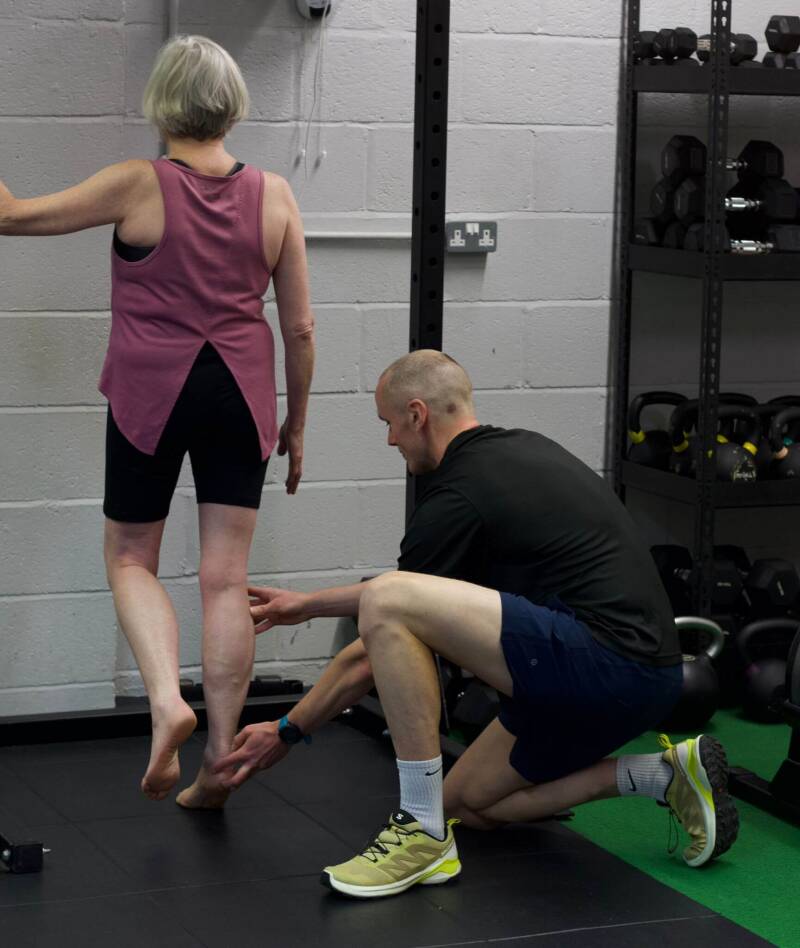
What is Achilles tendinopathy?
The Achilles tendon is the large tendon connecting the calf muscles to the heel bone. It plays an important role in walking, running, jumping and pushing off the ground.
Achilles tendinopathy occurs when the tendon becomes painful and less tolerant to load. It is often referred to as Achilles tendinitis, although the term tendinopathy is generally more accurate because persistent tendon problems are not simply caused by inflammation.
Achilles tendinopathy commonly occurs in two areas:
-
Mid-portion Achilles tendinopathy – pain typically occurs 2–6 cm above the heel bone.
-
Insertional Achilles tendinopathy – pain is located where the tendon attaches to the heel bone.
The two conditions can behave differently and may require different rehabilitation approaches.
What causes Achilles tendinopathy?
Achilles tendon pain often develops when the load placed on the tendon increases faster than its capacity to tolerate it.
Common triggers include:
-
Increasing running distance or intensity
-
Introducing hills or speed work
-
Returning to sport after a period of reduced activity
-
Changes in footwear or training surfaces
-
Increasing frequency of training
-
Reduced calf strength or endurance
-
Changes in running or sporting load
-
Repetitive jumping or explosive activity
-
Sudden increases in time spent walking or standing
Importantly, Achilles tendinopathy is not necessarily caused by one specific movement or structural abnormality. Tendon pain is influenced by the interaction between load, tendon capacity, recovery and other individual factors.
Symptoms of Achilles tendinopathy
Typical symptoms include:
-
Pain or stiffness around the Achilles tendon
-
Pain when walking, running or exercising
-
Stiffness when getting out of bed
-
Pain during the first few minutes of activity that may ease as you warm up
-
Pain or stiffness after exercise
-
Tenderness when pressing on the tendon
-
Swelling or thickening of the tendon
-
Reduced calf strength
-
Difficulty performing single-leg calf raises
-
Reduced tolerance for running, jumping or hills
Symptoms can vary considerably between people. Some people experience significant pain despite being able to continue exercising, while others find that relatively small amounts of activity aggravate their symptoms.
How is Achilles tendinopathy diagnosed?
Achilles tendinopathy is usually diagnosed through a detailed assessment of your symptoms and physical examination.
Your physiotherapist will assess factors such as:
-
The location and behaviour of your pain
-
Achilles tendon tenderness and swelling
-
Calf strength and endurance
-
Single-leg calf raise capacity
-
Ankle movement
-
Functional movements such as walking, hopping or running where appropriate
-
Recent changes in your training or activity
-
Your overall workload and recovery
Imaging such as an ultrasound scan or MRI is not always necessary to diagnose Achilles tendinopathy. It may be recommended when the diagnosis is unclear, symptoms are unusually severe or there is concern about another condition or a significant tendon injury.
Achilles Tendinopathy Treatment
The most important part of treatment is usually progressive rehabilitation.
Rather than simply resting the tendon, rehabilitation aims to gradually improve its capacity to tolerate the loads required for your everyday activities, sport or running.
Your treatment may include:
Calf strengthening
Progressive calf strengthening is a key component of Achilles rehabilitation.
Depending on your symptoms and stage of rehabilitation, exercises may include:
-
Isometric calf exercises
-
Seated calf raises
-
Standing calf raises
-
Single-leg calf raises
-
Heavy resistance calf strengthening
-
Hopping and jumping exercises
-
Sport-specific loading
The appropriate exercises and progression will depend on your individual presentation.
Load management
Completely stopping activity is not always necessary.
Instead, we can help you identify which activities are aggravating your symptoms and modify your training appropriately. This may involve temporarily reducing running volume, speed work, hills or jumping before gradually rebuilding your capacity.
Return to running
If you are a runner, rehabilitation can be progressed towards your specific running demands.
This may include gradually reintroducing:
-
Easy running
-
Increased running duration
-
Increased weekly mileage
-
Hills
-
Faster running
-
Intervals and sprinting
The aim is to ensure that your Achilles tendon can tolerate the demands of your normal running rather than simply reducing your symptoms temporarily.
Movement and strength assessment
We may also assess your wider lower-limb strength and movement, including your:
-
Calf muscles
-
Foot and ankle
-
Knee
-
Hip
-
Single-leg control
-
Running technique
These factors can help us understand how you are currently distributing load through your lower limb.
How long does Achilles tendinopathy take to recover?
Recovery time varies considerably.
Some people improve within several weeks, while longer-standing Achilles tendinopathy may require several months of progressive rehabilitation.
The length of recovery depends on factors such as:
-
How long you have had symptoms
-
Severity of your symptoms
-
Your current tendon capacity
-
Training and activity levels
-
How much the tendon is being loaded
-
Previous episodes of Achilles pain
-
Your ability to progressively strengthen the tendon
A gradual improvement in your ability to tolerate activity is often a more useful measure of recovery than pain alone.
Can I keep running with Achilles tendinopathy?
Often, yes.
You do not necessarily need to completely stop running. In many cases, running can be modified according to your symptoms while you work on rebuilding tendon capacity.
Your physiotherapist can help determine:
-
How much running you can currently tolerate
-
Whether you should reduce distance or intensity
-
Whether hills or speed work need to be temporarily modified
-
How to progress your running safely
-
When you are ready to return to your normal training
Achilles Tendon Rupture
A sudden Achilles injury is different from typical Achilles tendinopathy.
An Achilles tendon rupture may cause:
-
Sudden severe pain
-
A sensation of being kicked in the back of the ankle
-
A popping or snapping sensation
-
Difficulty walking normally
-
Significant difficulty pushing off
-
Inability or marked difficulty performing a single-leg calf raise
If you experience a sudden injury with these symptoms, you should seek urgent medical assessment rather than treating it as routine Achilles tendinopathy.
Achilles Tendinopathy Physiotherapy in Newcastle
At NE Physio, we provide evidence-informed physiotherapy for Achilles tendon pain and tendinopathy in Newcastle.
We will assess your symptoms, identify the factors contributing to your pain and develop a rehabilitation programme based around your goals.
Whether you want to return to running, get back to sport, improve your walking or simply exercise without Achilles pain, treatment will be tailored to your current capacity and gradually progressed.
Book an Achilles Tendinopathy Assessment
If you are experiencing persistent Achilles tendon pain in Newcastle, book an assessment with NE Physio to find out what is contributing to your symptoms and how we can help.
Or call 07881237839 to discuss how NE Physio can help
Page Created and Reviewed by Clinician: Matthew Ivin PH 118421