Achilles Tendinitis Treatment in Newcastle
Expert Physiotherapy for Achilles Tendinopathy
Achilles tendinopathy is a common cause of pain around the back of the ankle. It particularly affects runners and people involved in sports that involve running, jumping and repeated loading of the calf muscles.
Achilles tendon pain can make walking, running, climbing stairs and exercising uncomfortable. Without appropriate rehabilitation, symptoms can sometimes become persistent and significantly affect your ability to participate in sport.
At NE Physio, we provide evidence-based physiotherapy for Achilles tendinopathy. Our aim is to reduce pain, improve the capacity of the Achilles tendon and progressively return you to your normal activities.
Whether you're a recreational runner, competitive athlete or simply experiencing persistent Achilles pain, we'll create a personalised rehabilitation programme around your symptoms and goals.
What is Achilles Tendinopathy?
The Achilles tendon is the large tendon connecting the calf muscles to the heel bone. It transfers the force generated by the calf muscles to the foot and plays an important role in walking, running and jumping.
Achilles tendinopathy occurs when the tendon is unable to tolerate the amount of load being placed through it.
It is often referred to as Achilles tendonitis, but persistent Achilles tendon problems are not simply caused by inflammation. The term Achilles tendinopathy is therefore more accurate.
Achilles tendinopathy can occur in two main areas:
Mid-portion Achilles Tendinopathy
This affects the middle section of the tendon, usually a few centimetres above the heel bone.
Insertional Achilles Tendinopathy
This affects the point where the Achilles tendon attaches to the heel bone.
The two conditions can require slightly different rehabilitation strategies, so identifying the location of your pain is important.
What Causes Achilles Tendinopathy?
Achilles tendinopathy usually develops when the load placed through the tendon increases faster than its ability to adapt.
Common contributing factors include:
-
Increasing running distance
-
Increasing running speed
-
Hill running
-
Sprinting
-
Jumping sports
-
Sudden increases in training volume
-
Returning to sport after a break
-
Reduced calf strength
-
Changes in footwear or training surfaces
-
Inadequate recovery between high-load sessions
Symptoms can develop following a single change in activity or from the cumulative effect of several smaller increases in training load.
Symptoms of Achilles Tendinopathy
The main symptom is pain around the Achilles tendon.
Common symptoms include:
-
Pain at the back of the ankle
-
Pain when running
-
Pain during jumping
-
Stiffness when first getting up in the morning
-
Stiffness at the start of exercise
-
Pain when walking uphill
-
Tenderness around the tendon
-
Thickening of the tendon
-
Reduced calf strength
-
Pain after exercise
Symptoms can sometimes improve as you warm up but return later during the day or after exercise.
How is Achilles Tendinopathy Diagnosed?
Achilles tendinopathy can usually be diagnosed through a clinical assessment.
At NE Physio, we'll discuss:
-
When your symptoms began
-
Changes in your training
-
Running volume and intensity
-
Previous injuries
-
Your sporting activities
-
Activities that aggravate your symptoms
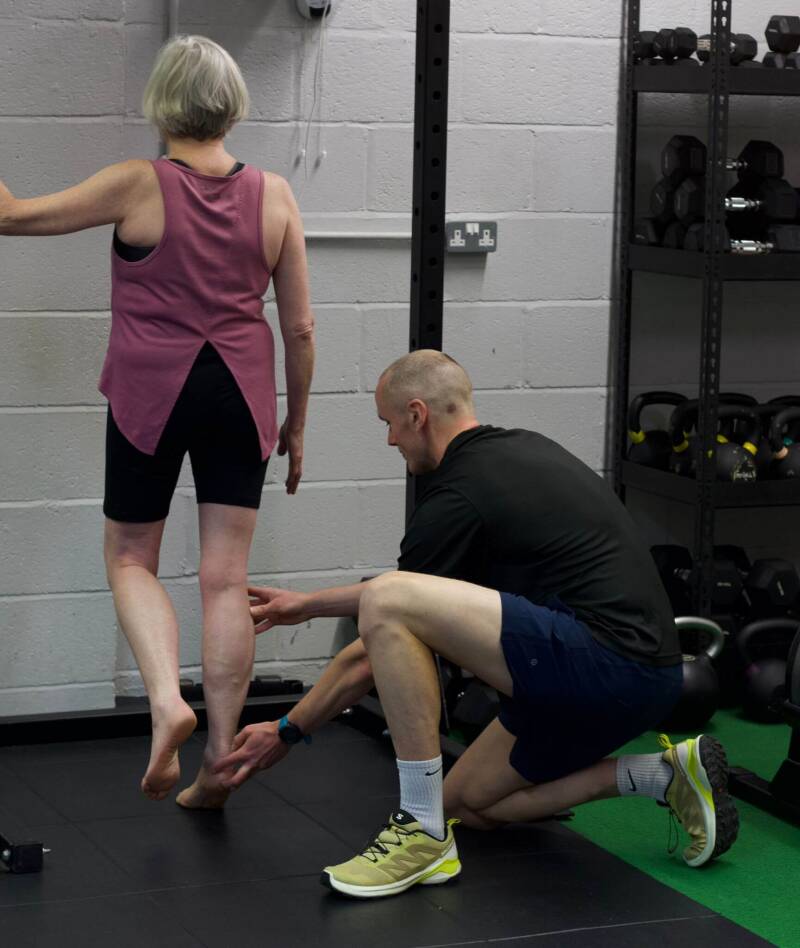
Your physiotherapist will assess:
-
Achilles tendon tenderness
-
Ankle movement
-
Calf strength
-
Single-leg calf raises
-
Balance
-
Walking
-
Running where appropriate
-
Functional movements such as hopping and jumping
Ultrasound or MRI scans are not usually required to diagnose Achilles tendinopathy. Imaging may be considered when the diagnosis is unclear, symptoms are unusually severe or another condition is suspected.
Importantly, changes in the Achilles tendon on imaging can also occur in people without pain, so scan findings need to be interpreted alongside your symptoms and examination.
Physiotherapy Treatment for Achilles Tendinopathy
The main treatment for Achilles tendinopathy is progressive tendon loading.
Rather than simply resting the tendon, rehabilitation aims to gradually increase its ability to tolerate the demands of everyday life, running and sport.
Load Management
The first step is understanding which activities are currently placing too much load through the tendon.
This may involve temporarily modifying:
-
Running
-
Sprinting
-
Hill training
-
Jumping
-
Sports sessions
-
Gym exercises
Complete rest is rarely necessary. Instead, we'll help you find an appropriate level of activity while your tendon begins to adapt.
Calf Strengthening
Strong calf muscles are essential for normal Achilles tendon function.
Your rehabilitation may include:
-
Seated calf raises
-
Standing calf raises
-
Single-leg calf raises
-
Heavy resistance exercises
-
Bent-knee calf strengthening
-
Sport-specific calf exercises
Exercises are progressed gradually as your strength and tendon capacity improve.
Progressive Tendon Loading
As your symptoms improve, rehabilitation progresses towards heavier and more demanding exercises.
This may include:
-
Heavy slow resistance training
-
Single-leg strengthening
-
Hopping
-
Jumping
-
Plyometric exercises
-
Running drills
The aim is to prepare the tendon for the specific loads it will experience during your normal activities and sport.
Return to Running and Sport
For runners and athletes, rehabilitation continues beyond simply being able to walk without pain.
Your programme may gradually progress through:
-
Walking
-
Jogging
-
Running
-
Faster running
-
Hills
-
Sprinting
-
Jumping
-
Change of direction
-
Sport-specific training
We'll help you progressively rebuild your training volume and intensity rather than returning immediately to your previous level.
Can You Exercise with Achilles Tendinopathy?
In most cases, yes.
Complete rest can reduce the capacity of the tendon and make returning to sport more difficult.
Instead, your activity should be modified according to your symptoms and stage of rehabilitation.
Depending on your symptoms, you may be able to continue activities such as:
-
Cycling
-
Swimming
-
Strength training
-
Upper-body training
-
Modified running
Your physiotherapist can help determine an appropriate level of activity.
Some discomfort during rehabilitation does not necessarily mean that you are causing damage to the tendon. However, if pain or stiffness is consistently worsening, your training load may need to be adjusted.
How Long Does Achilles Tendinopathy Take to Recover?
Achilles tendinopathy can take time to recover, particularly when symptoms have been present for several months.
Recovery depends on:
-
Duration of symptoms
-
Severity of symptoms
-
Tendon capacity
-
Calf strength
-
Training load
-
Sporting demands
-
Consistency with rehabilitation
Some people notice improvements within several weeks, while longer-standing Achilles tendinopathy may require several months of progressive rehabilitation.
The aim is not simply to reduce pain but to build sufficient tendon capacity to tolerate your normal activities and sporting demands.
Can Achilles Tendinopathy Be Prevented?
There is no guaranteed way to prevent Achilles tendinopathy, but maintaining calf strength and managing training loads appropriately can reduce your risk.
Helpful strategies include:
-
Progressing running gradually
-
Maintaining calf strength
-
Avoiding sudden increases in training volume
-
Allowing sufficient recovery between high-load sessions
-
Gradually increasing hill and speed work
-
Maintaining strength during periods away from sport
-
Building running capacity progressively after injury
If you're returning to running after a break, we'll help you establish an appropriate progression rather than immediately returning to your previous training volume.
Why Choose NE Physio?
At NE Physio, we provide one-to-one physiotherapy focused on understanding your injury and helping you return to the activities you enjoy.
We provide:
-
Comprehensive assessment
-
Evidence-based tendon rehabilitation
-
Progressive calf strengthening
-
Running rehabilitation
-
Load management advice
-
Sport-specific rehabilitation
-
Hands-on treatment where appropriate
-
Clear explanations throughout your recovery
Whether you're a recreational runner or competitive athlete, we'll help you progressively rebuild your Achilles tendon capacity and confidence.
Book Your Achilles Tendinopathy Assessment
If Achilles tendon pain is affecting your running, walking, gym training or sport, physiotherapy can help you understand the problem and develop a structured plan for recovery.
Book an appointment with NE Physio today for a comprehensive assessment and personalised rehabilitation programme.
We help people across Newcastle recover from Achilles tendinopathy, return to running and sport, and build the strength and tendon capacity needed to reduce the risk of future problems.
Or contact 07881237839 to see how NE Physio can help.